
The full four-suit game
Here is what to know. This game uses two complete decks for a total of 104 cards. The objective remains eight same-suit sequences from King to Ace. Spades, hearts, clubs and diamonds each contain two copies of every rank. Four suits adds more suit conflicts without changing the basic descending-rank rule.
Two things to check
Spades and clubs remain different suits even though both are shown in dark ink. A group can move together only when all selected cards share a suit and descend by one rank. You can place an exposed card on a card exactly one rank higher even when their suits differ. Matching colors are not enough to create a movable sequence.

Preserve useful groups
Keep these details in mind. Joining two matching segments often frees a column or exposes another card. Before moving a segment, check where the cards below it could go next. Small same-suit sequences can provide flexible building blocks. A long mixed-suit build may require several intermediate destinations to dismantle.
Open the tableau
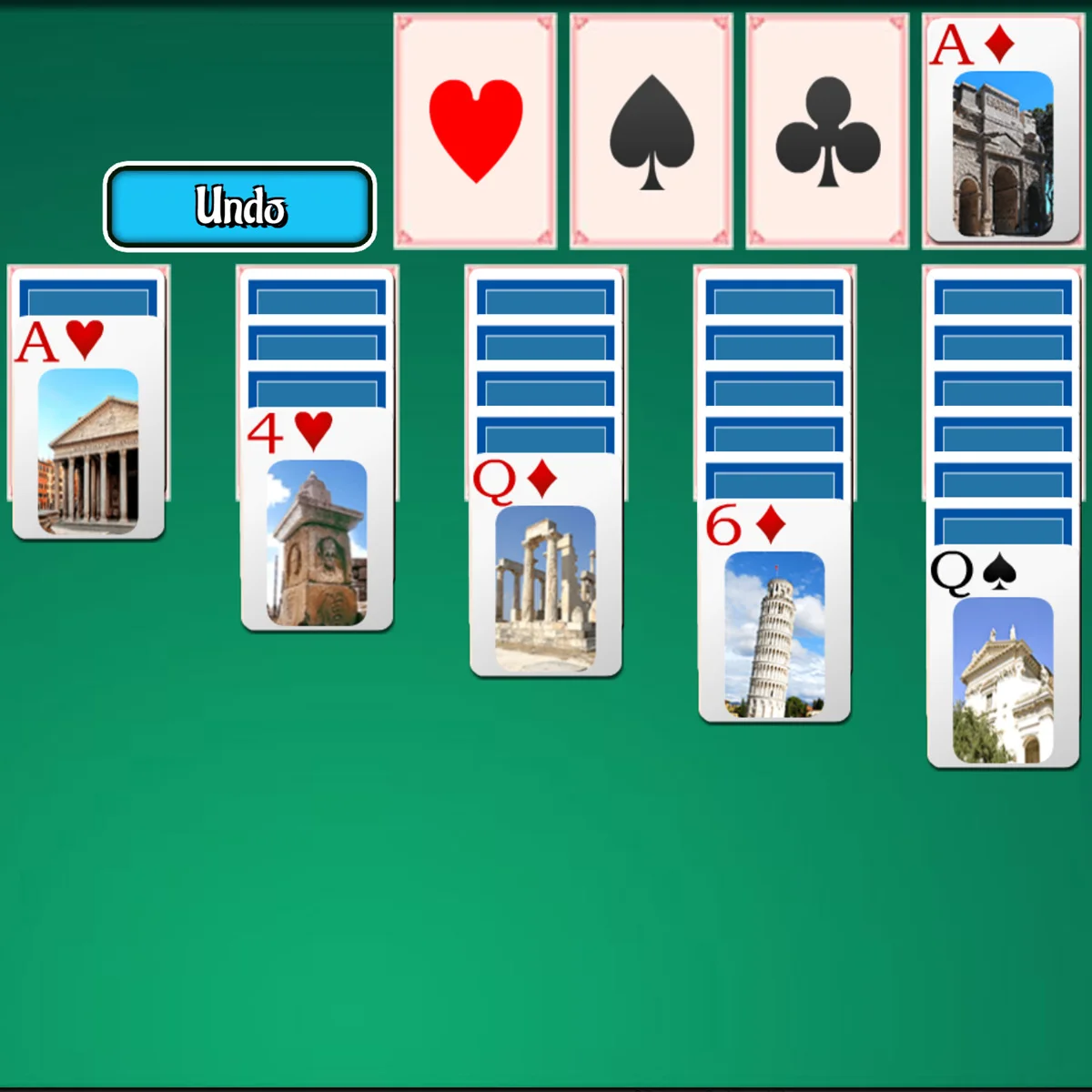
Here is what to know. Moving the final exposed card away turns the next hidden card face up. The starting layout contains hidden cards beneath the exposed bottom cards. Opening columns gives you more information for later decisions. The identities of those hidden cards are not shown by the Hint feature.
Manage empty columns
Keep these details in mind. Consider which temporary arrangement leaves you with the most useful follow-up move. Spare columns can help separate suits that have become interleaved. Moving a whole column to another empty column changes its position without improving the layout by itself. An empty column accepts any exposed card or legal same-suit group.
Think about Kings
Keep these details in mind. A King can move only to an empty column because no rank is higher. A same-suit group starting with a King follows that same destination rule. Moving a King into the only empty column can limit your ability to reorganize other cards. A completed King-to-Ace run leaves the tableau automatically once all thirteen cards are face up and aligned.
Deal carefully
On this website, the following points apply. Use the visible layout to plan before dealing, while recognizing that hidden stock cards are unknown. A stock deal places one card onto each of the ten columns. A new row can interrupt promising groups as well as create new connections. You must fill every empty column before the stock can be used.
Track the finish
The win message appears only after the game has collected all eight valid runs. The counter advances whenever a full same-suit run is collected. Eight collected runs account for all 104 cards in the game. A descending mixed-suit run remains on the table until its suits can be separated.
Practice a difficult deal
Replay begins the same shuffle again so you can compare a different opening plan. A random deal is not advertised as guaranteed winnable. Undo restores the previous card arrangement, including automatic flips and completed runs. Hints list legal moves and do not solve the whole deal.
Local four-suit progress
Keep these details in mind. The timer counts active visible play rather than time spent away from the page. Use Privacy & Cookie Settings to manage saving or remove those local records. This browser can save four-suit progress separately from the other difficulty modes. Local statistics show started games, wins and the best move count recorded on this device.